

The transition from a promising academy player to a consistently elite Tier-one performer remains one of the most critical and challenging phases in professional Counter-Strike 2. The pipeline is often saturated, yet only a handful of talents manage to escape the gravitational pull of obscurity.
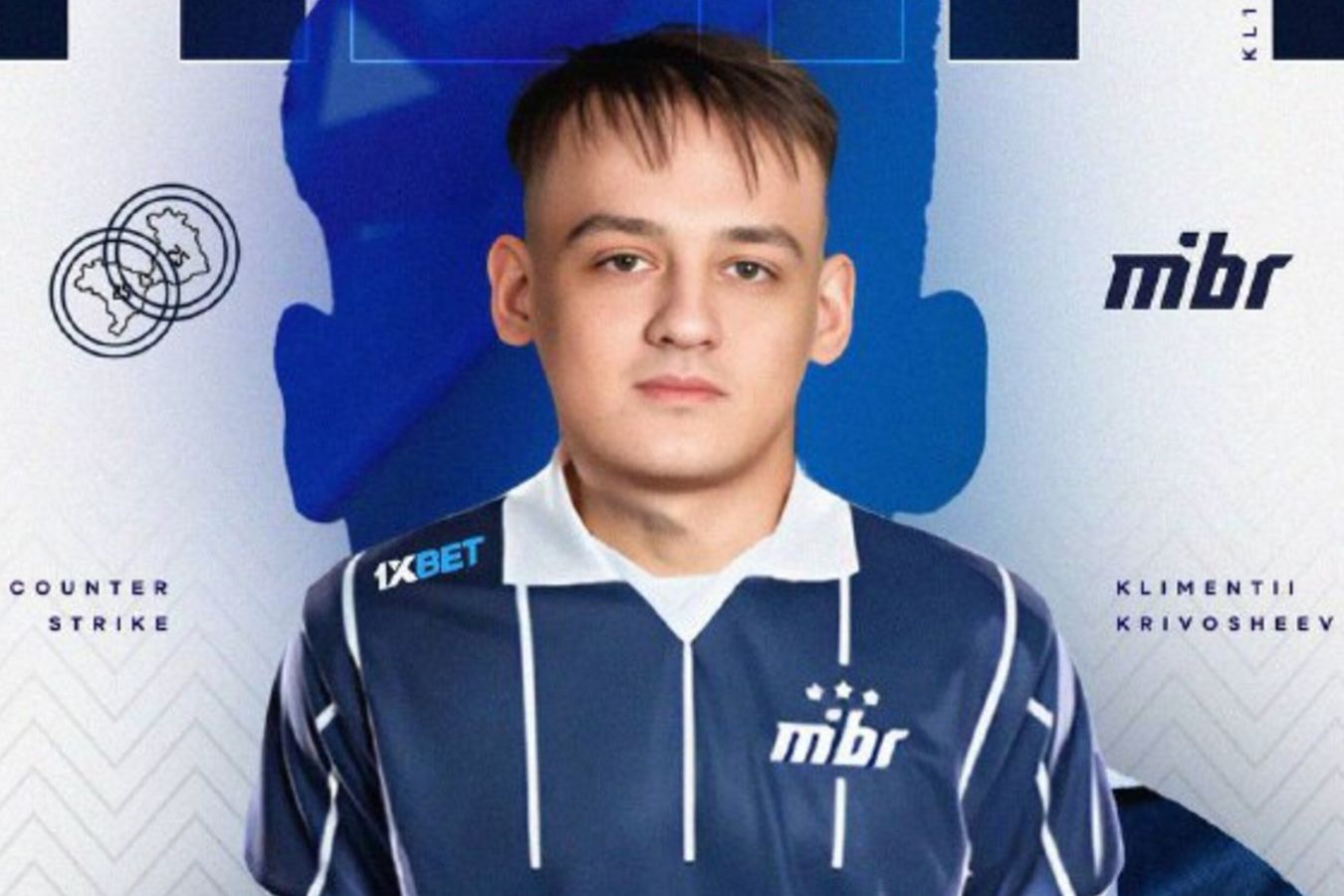
Dorian “xertioN” Berman, the Israeli rifler for MOUZ, a team renowned for its ability to scout and develop high-potential players, recently offered his prediction for the esports landscape of 2026. Given MOUZ’s track record, when xertioN points to a name, the industry tends to pay attention. His forecast for the future? Russian prodigy Klim “kl1m” Krivosheev.
The Rationale: Mechanical Skill Meets Cultural Hurdle
Krivosheev, currently 20 years old, has been operating in a fascinating, high-pressure crucible: a loan spell with the Brazilian powerhouse MIBR, originating from the youth structure of G2 Esports. This unique trajectory—from European development to a South American tactical environment—is exactly what xertioN highlighted as both the biggest obstacle and the clearest indicator of his raw potential.
In his assessment, xertioN did not shy away from the practical difficulties kl1m faces, specifically the linguistic and cultural integration required to succeed immediately in a Brazilian team structure:
“I think he needs a little more time, and I can imagine it`s not that easy to immediately integrate into a Brazilian team and start showing results without perfectly selected partners and help from those around him. But, considering the mechanical skill he has already demonstrated, I believe we will see him in the Top 20 in the future.”
This statement cuts directly to the technical reality of competitive esports: raw “mechanical skill” is a prerequisite, not a guarantee. The ability to translate individual prowess into team success often hinges on soft skills—communication efficiency, systemic integration, and cultural adaptation.
The Data Points: A Technical Argument for Potential
Despite the challenges of navigating a new team environment and linguistic barrier, kl1m’s performance metrics already demonstrate high efficiency. Data recorded across 48 maps played for MIBR shows the young Russian maintaining an impressive average rating of 1.28. In the world of professional CS2, this data point suggests his fragging power and fundamental output are significantly elevated, even if the team around him is still navigating rotational changes or strategic adjustments.
This mechanical consistency is the foundation upon which xertioN’s prediction is built. It suggests that once the synergy issues are resolved—once kl1m finds himself in a lineup where tactical communication is seamless, be it MIBR or elsewhere—his output will scale dramatically.
The Academy Exodus: G2 and the Investment in Future Stars
kl1m’s journey is also a compelling case study in the effectiveness of European academy systems. Having developed within the G2 Esports structure, he represents a growing pool of highly refined young talent ready for immediate deployment. G2’s decision to loan him to MIBR rather than keep him on the bench provides the essential element required for development: high-stakes, Tier-one playtime.
The move also presents an interesting technical paradox: the pursuit of Top 20 recognition often requires a player to move beyond the comfort zone of their initial academy ecosystem and prove their adaptability in the field. In this instance, kl1m has been thrown into the deep end—a high-pressure experiment to see if his individual proficiency can transcend team structure and geography.
Conclusion: The Countdown to 2026
xertioN’s prediction is not merely a vote of confidence; it is a timeline. Forecasting a Top 20 ranking requires the confluence of several factors over the next two years:
- Sustained Mechanical Performance: Maintaining or improving the current 1.28 rating under increased pressure.
- Team Integration: Finding a stable, high-level lineup that maximizes his role.
- Maturity and Adaptability: Overcoming the inevitable psychological pressures associated with elite competition.
The competitive environment of CS2 demands immediate results, yet development is rarely instantaneous. If kl1m manages to solve the complex puzzle of international integration while maintaining his already elite mechanical skill ceiling, then xertioN’s prophecy—that a Russian prodigy currently honing his craft in a Brazilian environment will become a global star—will prove to be one of the most accurate scouting calls of the decade.
 Finley Holt