

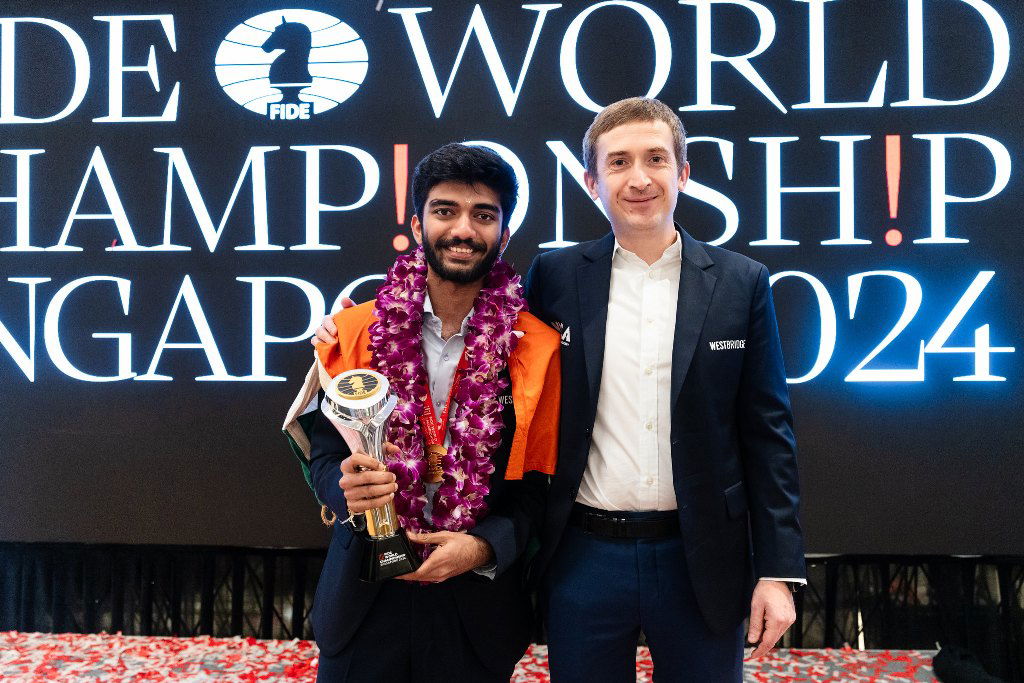
The arc of D Gukesh’s reign as the youngest-ever Chess World Champion presents a fascinating, albeit turbulent, case study in elite sports psychology and performance consistency. After securing the ultimate title in late 2024, the subsequent year, 2025, has been marked less by dominance and more by unexpected regression. The recent premature exit from the World Cup, concluding in the third round, serves as the most immediate point of concern, crystallizing a year of poor results in critical classical events.
This inconsistency has not escaped the scrutiny of the chess world, prompting inevitable, and perhaps unduly harsh, questions regarding the champion`s current status and legitimacy. Yet, Gukesh’s coach, Grandmaster Grzegorz Gajewski, maintains a sober perspective, viewing this turbulence through the lens of developmental sports science. For Gajewski, the erratic performance is merely an expected variable for a teenager competing at the highest echelon of the sport.
The Inconsistent Data Points of 2025
While the overall narrative of 2025 is one of struggle, Gukesh demonstrated intermittent flashes of world-class capability. Early in the year, he narrowly lost the Tata Steel Masters on tie-breaks and applied significant pressure on Magnus Carlsen at the Norway Chess event, securing notable classical victories against the former World Champion. Furthermore, he registered a win against Carlsen in rapid chess during the Grand Chess Tour event in Zagreb.
However, these successes were severely overshadowed by comprehensive failures in major long-form competitions. His 41st place finish at the FIDE Grand Swiss and the disappointing World Cup campaign highlight a systemic difficulty in maintaining peak form throughout endurance-based classical tournaments. Coupled with subpar outings at the Sinquefield Cup and the Superbet Chess Classic, as well as continued struggles in rapid and blitz controls (such as the Freestyle Chess Tour), the conclusion is statistically unavoidable: 2025 was a performance setback for the reigning champion.
The Psychology of the Crown
Gajewski identifies the core challenge not solely in technical chess errors, but in the profound psychological adjustment required after achieving a lifelong goal. The World Championship title mandates a complete motivational reset. “When you work all your life for something, and then you get it, you have to find new motivations,” Gajewski notes. For someone so young, this transition is inherently destabilizing.
The external pressure compounds this internal crisis. The global chess community operates with a historical expectation of near-perfection from its world champion, a standard set by titans like Carlsen and Kasparov. There is little allowance for developmental inconsistency, irrespective of age. The champion is required to compete and dominate across all formats—classical, rapid, and blitz—a demand that is logically overwhelming for a player still developing his holistic game.
This relentless demand for omnipresence and perfection is the world Gukesh now inhabits—a world that, with a touch of technical irony, grants no developmental grace period to its youngest ruler.
Addressing the Critics: The Kasparov Criterion
The discourse surrounding Gukesh has been amplified by high-profile skepticism. Both Garry Kasparov and Magnus Carlsen have been vocal critics, with Kasparov publicly suggesting the championship crown does not rest with the same gravitas on Gukesh`s head as it did on his own or Carlsen’s. While these statements provoke strong debate, Gajewski dismisses the legitimacy doubts unequivocally: “Does he deserve the world championship? Of course he does, because he won it.”
Gukesh’s team acknowledges the obvious truth: he is not yet in the same realm as a peak Carlsen or Kasparov. That level of comprehensive chess mastery remains a future objective. The crucial insight gained from 2025 is not about eliminating technical mistakes—which Gajewski recognizes and is addressing internally—but about strategic energy management.
The 2026 Blueprint: Selectivity and Classical Focus
The most significant strategic overhaul planned for 2026 centers on tournament selectivity. The 2025 schedule saw Gukesh participating extensively across multiple tours and formats (Freestyle Chess Tour, Grand Chess Tour, major invitational classical events). While exposure to top-tier competition (such as playing Carlsen, Hikaru Nakamura, and Fabiano Caruana in a single event like Clutch Chess) offers invaluable educational opportunities, the density proved counterproductive.
The challenge, as articulated by the team, is balancing the need for chess education and opportunity against the necessity for rest and recovery. The 2026 strategy will involve a more disciplined selection process, heavily prioritizing classical chess—the format central to his title defense—while reducing exposure to formats that contribute to competitive fatigue.
The only planned deviation from this classical focus will be strategic assaults on high-profile events like the World Rapid and Blitz Championships, scheduled for Doha next month, aimed at rounding out his expertise without compromising long-term focus.
Conclusion: Vindicating the Title
Gukesh himself stated upon winning the championship that he was not yet the best player in the world, but aimed to be. The performance metrics of 2025 suggest he is currently further from that ambition than he was at the end of 2024. However, 2026 presents a clean slate—an opportunity to integrate the difficult lessons learned this year into a refined, sustainable competitive model.
A successful defense of the World Championship crown will functionally nullify the current noise concerning his status and legitimacy. It is illogical to question the merit of a back-to-back world champion. Grzegorz Gajewski and Gukesh Dommaraju are now engaged in the intensive preparation required to navigate this arduous path once more, committed to securing the crown they captured so memorably just one year prior.
 Oliver Brampton
  Finley Holt