

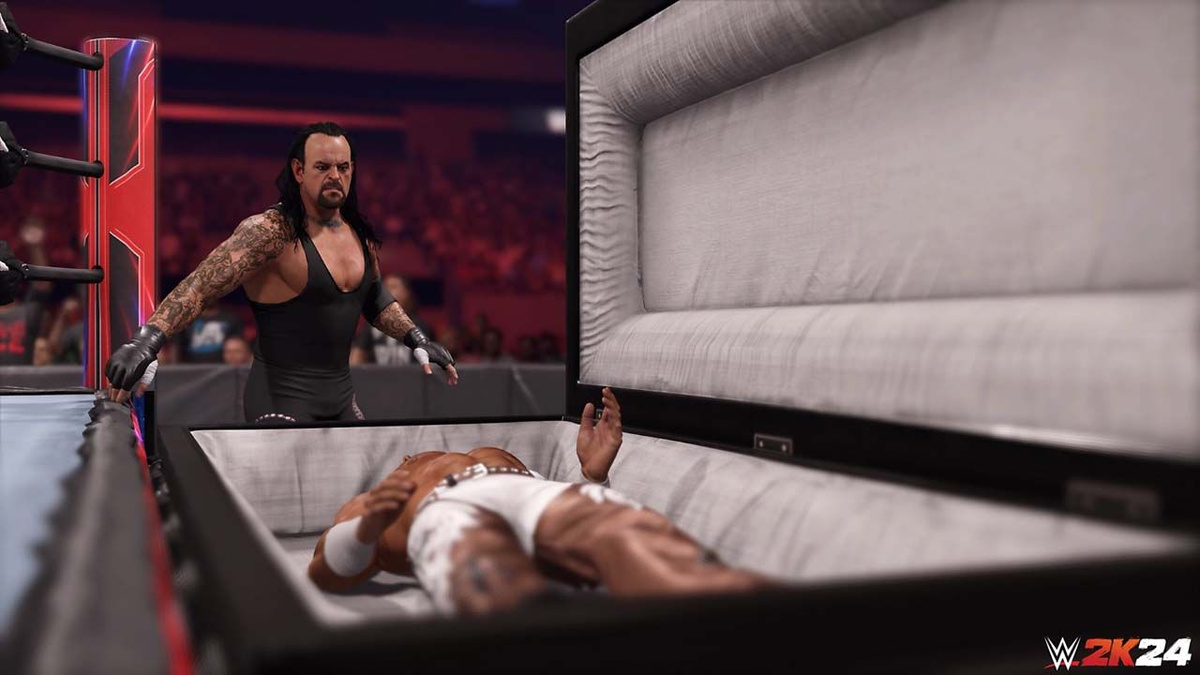
In a move that aligns with the established economic model of annual sports simulations, 2K Sports has formally announced the end-of-life cycle for WWE 2K24. The announcement confirms a structured plan for the complete removal of the title from digital storefronts and the cessation of all associated online services. Players across all platforms—PC, PlayStation 4, PlayStation 5, Xbox One, and Xbox Series X/S—are affected by this operational timeline.
- January 31, 2026: Digital Delisting. The game and all associated DLC/Virtual Currency will be removed from sale on all platforms.
- March 31, 2026: Server Shutdown. All functions requiring an online connection will permanently cease.
The Inevitability of Digital Obsolescence
While the news might arrive as a disappointment for the dedicated online community, the operational lifespan of WWE 2K24 is remarkably standard within the genre. The game, which launched in March 2024, will have maintained its full online functionality for approximately two years. This period is often deemed the commercially viable window before the consumer focus is fully migrated to the succeeding annual iteration (in this case, WWE 2K25, released March 2025).
From a purely technical standpoint, the shutdown reflects a calculated resource allocation strategy. Maintaining online infrastructure—including matchmaking services, security, and data storage—for older titles becomes economically inefficient when the majority of the active user base has transitioned to the latest release. This is not isolated to the WWE franchise; 2K previously executed similar lifecycle terminations for titles such as The Golf Club 2019 and PGA Tour 2K21.
The Impact: What ‘Server Shutdown’ Truly Means
The term “server shutdown” is a technical euphemism for the complete removal of all dependent online features. For players, this translates to the irreversible loss of specific game components:
- Online Multiplayer: All competitive and cooperative online matches will become inaccessible.
- Community Creations: User-generated content (CAWs, arenas, titles) uploaded to the 2K servers will be permanently unavailable for download or sharing.
- Virtual Currency (VC): While offline currency may remain usable for in-game unlocks, the ability to purchase, earn, or utilize VC tied to online progression systems will be terminated.
- DLC and Add-Ons: As of the delisting date (January 31, 2026), all previously released expansion packs and downloadable content will be removed from all digital stores. Players who own them will retain the files, but the ability to re-download or purchase them will vanish.
In essence, the digital storefront and the communal interaction hubs are being systematically dismantled. It is a mandatory software expiration protocol enforced by the publisher to rationalize the product lineup.
A Digital Legacy: What Remains Playable?
A frequent concern during these server shutdowns is whether the game becomes entirely useless. Fortunately, for sports titles with strong single-player components, the core experience often survives the digital sunset. Once the servers go dark, players who own the game will still retain full access to all essential offline modes, provided the base game installation is intact.
This includes:
- Play Now: Exhibition matches against the AI.
- Showcase Mode: The historical narrative mode focusing on specific WWE eras or superstars.
- MyRISE: The career mode progression.
- Universe Mode: The management and booking simulation feature.
For players heavily invested in creating unique roster elements or deep custom narratives within Universe Mode, WWE 2K24 retains considerable value, provided those assets were generated offline or downloaded prior to the March 31, 2026 cutoff date. However, the inability to patch, update, or share new content significantly caps the longevity of the title.
The impending server closure serves as a stark reminder of the temporary nature of digital ownership in the highly monetized, annual video game ecosystem. While the technical rationale is sound—resources must follow the active player base—the operational necessity for scheduled obsolescence remains a point of technical irony for consumers who prefer to retain access to the complete experience of a product they purchased.
 Callum Darby